When Your Body Breaks the Rules: Navigating Atypical Symptoms That Defy Easy Diagnosis
When the Symptom Checker Comes Up Empty
It is 1:47 in the morning. You have been awake for two hours cataloging sensations you cannot quite name — a pressure behind your sternum that is not quite chest pain, a fatigue so dense it feels structural, a low-grade nausea that intensifies when you lie still. You open a symptom checker. The algorithm offers you acid reflux, anxiety, or a pulled muscle. None of them feel right.
This experience — the mismatch between what a patient feels and what the diagnostic tools suggest — is far more common than most people realize, and it carries genuine clinical consequences. Atypical symptom presentations are responsible for a disproportionate share of delayed diagnoses in the United States, and the problem is amplified significantly when care occurs outside of standard business hours, when fewer specialists are available and time pressure on providers is acute.
Understanding why this happens, and what you can do about it, is not merely an academic exercise. It is a practical skill that could change the outcome of your next after-hours encounter with a healthcare provider.
Why Atypical Presentations Are More Common Than Medicine Admits
Medical training is built on pattern recognition. Clinicians learn to associate clusters of symptoms with specific conditions: the crushing substernal chest pain radiating to the left arm that signals a myocardial infarction, the sudden severe headache described as "the worst of my life" that suggests subarachnoid hemorrhage. These patterns are real and they save lives.
But they are also incomplete. Research consistently demonstrates that a significant percentage of patients — particularly women, older adults, individuals with diabetes, and people with darker skin tones — present with conditions that deviate substantially from the canonical picture. A 2020 review published in the Journal of the American Heart Association found that women experiencing heart attacks were nearly twice as likely as men to present without chest pain, instead describing jaw discomfort, back pressure, or profound exhaustion. Many of those women were initially sent home.
The problem is not that clinicians are careless. It is that the diagnostic frameworks most widely used in clinical practice — including the symptom checkers that millions of Americans consult each night — were built largely on data from populations that did not reflect the full diversity of human biology.
The After-Hours Amplification Effect
Daytime medicine has its own inefficiencies, but the conditions of after-hours care introduce specific vulnerabilities that compound the risk of misdiagnosis for atypical presentations.
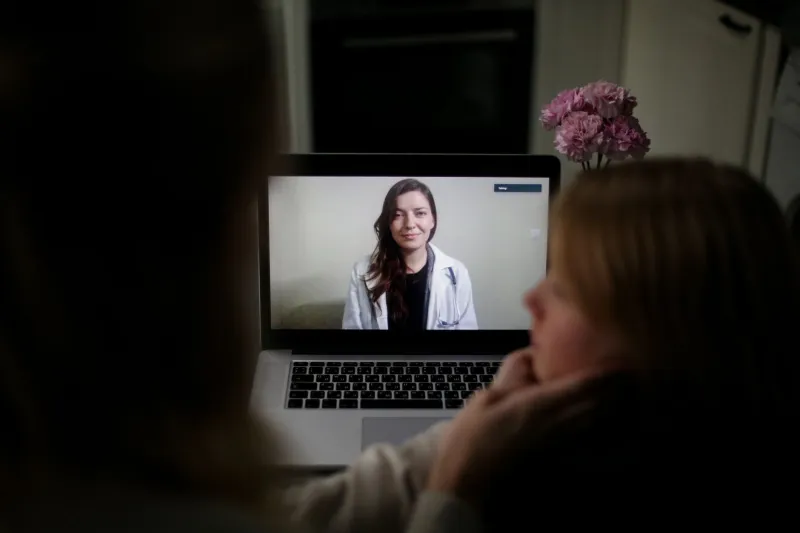
Consider what a telehealth provider faces at 2 AM: a video call with a patient they have never met, no access to that patient's longitudinal medical record, limited ability to perform a physical examination, and institutional pressure to triage quickly and safely. In that environment, the path of least resistance is to match the patient's complaint to the most statistically probable diagnosis and act accordingly.
For patients whose presentations fit neatly into those probability distributions, this works well. For patients whose symptoms are unusual, subtle, or multisystem in character, the same process can produce a dismissal that feels, to the patient, like being told their experience is not real.
One illustrative case: a 34-year-old woman in Ohio contacted a telehealth service three nights in a row over the span of a week, each time describing what she called "electric sensations" in her hands and feet, accompanied by intermittent double vision and fatigue so severe she had difficulty climbing stairs. Each provider she spoke with attributed her symptoms to anxiety or stress. On the fourth visit, a neurologist on call recognized the constellation as consistent with early multiple sclerosis. Her eventual diagnosis was confirmed by MRI several weeks later. The three prior providers were not negligent — they were working within standard probabilistic frameworks. The problem was that her presentation did not fit the expected age of onset or the textbook symptom sequence.
Building a Symptom Record That Works in Your Favor
If there is one actionable takeaway from the science of atypical presentations, it is this: documentation changes outcomes. A patient who arrives at a telehealth visit — or an emergency department — with a written, timestamped symptom log is fundamentally better positioned than one who is reconstructing their experience from memory under stress.
Effective symptom documentation does not require medical training. It requires specificity, consistency, and a willingness to note details that might seem irrelevant. Consider tracking the following:
Character of the symptom. Is the sensation sharp, dull, burning, pressure-like, electric, or something you struggle to categorize? Do not default to the closest familiar word if it does not fit. Providers are trained to work with ambiguous descriptions.
Timing and pattern. Does the symptom appear at a specific time of day? Is it continuous or episodic? Does it worsen with particular activities, foods, positions, or emotional states?
Associated symptoms. Even seemingly unrelated phenomena — changes in appetite, unusual fatigue, mood shifts, changes in vision or hearing — can be diagnostically significant when viewed alongside the primary complaint.
What makes it better or worse. This information helps providers rule in or out entire categories of conditions.
What you have already tried. If you took an over-the-counter medication and it had no effect, or an unexpected effect, that is clinically meaningful data.
Presenting this record at the start of a telehealth call — even by reading it aloud from your phone — signals to the provider that you are an engaged, observant patient. It also subtly shifts the dynamic of the encounter from reactive to collaborative.
How to Advocate for Yourself When You Feel Dismissed
Advocating for yourself in a medical context is not the same as being combative. It means communicating clearly, asking specific questions, and requesting that your concerns be formally acknowledged in the clinical record.
If a provider offers a diagnosis that does not feel consistent with your experience, it is entirely appropriate to say: "I want to make sure I understand. Is it possible that what I am describing could also be consistent with something else? What symptoms should I watch for that would change your assessment?"
Ask whether your case warrants follow-up. Request that the provider document your symptom log in the visit notes. If you are using a telehealth platform, most services allow you to access your visit summary — review it, and if it does not accurately reflect what you described, contact the platform's patient services team to request a correction.
If you have seen multiple providers for the same unresolved concern, that pattern itself is important information. Bring it to the next encounter explicitly: "I have spoken with three providers about this over the past two weeks and I have not received a diagnosis that explains all of my symptoms. I would like a referral to a specialist."
The Role of Continuity in Complex Cases
One of the structural weaknesses of after-hours and on-demand telehealth is the absence of continuity. Each encounter begins from zero. For patients with atypical or evolving presentations, this discontinuity is a genuine clinical hazard.
Wherever possible, establish care with a primary care provider who can serve as the integrating clinician for your case — someone who sees the full picture across multiple visits and can recognize patterns that no single encounter would reveal. Many telehealth platforms now offer longitudinal care models that allow you to select a consistent provider. This option is worth seeking out if your symptoms are complex or persistent.
Your symptoms deserve a complete explanation, not just the most convenient one. At Healthcare 24Hrs, we believe that access to quality medical guidance should not diminish after dark — and neither should your right to be fully heard.
If you are experiencing symptoms that feel severe or rapidly worsening, do not wait. Contact emergency services or visit your nearest emergency department immediately.