Reading Your Own Signals: A Clinically Grounded Guide to Knowing When a Nighttime Symptom Is Truly Urgent

It begins, as it so often does, sometime after midnight. A chest sensation you cannot quite name. A headache that feels different from the ones you usually get. A heart that seems to be beating with unusual insistence. Within moments, your mind is running a parallel calculation: Is this serious, or am I doing this to myself again?
This question — asked by millions of Americans in the dark hours between midnight and dawn — deserves a serious, respectful answer. Not a dismissive reassurance, and not a catalogue of worst-case scenarios. What it deserves is a framework: a set of clinical principles grounded in the same triage logic that licensed providers use when they answer after-hours calls at 2 AM.
That is precisely what this guide offers.
Why Nighttime Makes Symptoms Harder to Evaluate
Before addressing how to assess a symptom, it is worth acknowledging why nighttime assessment is genuinely more difficult — not because you are irrational, but because of measurable physiological and psychological factors that affect everyone.
The body's cortisol levels, which serve a natural anti-inflammatory and anxiety-buffering function, are at their lowest between midnight and approximately 4 AM. Pain perception is measurably heightened during this window. The autonomic nervous system, which governs the fight-or-flight response, is more reactive in the absence of the sensory stimulation and cognitive engagement that occupy the daytime hours. In a quiet, dark room with nothing to focus on except your own body, normal physiological sensations that would go unnoticed at noon become objects of intense scrutiny.
None of this means your symptoms are imaginary. It means that the nighttime environment itself introduces interpretive noise — and that distinguishing signal from noise requires a deliberate, structured approach.
The First Question: Is This Symptom New, Different, or Progressive?
The single most useful initial question you can ask yourself about a nighttime symptom is not "How bad does this feel?" but rather: Is this new, noticeably different from what I have experienced before, or getting worse over time?
Intensity, experienced in isolation, is an unreliable guide. Anxiety produces physical sensations — chest tightness, palpitations, shortness of breath, dizziness, tingling in the extremities — that can be subjectively indistinguishable from the early symptoms of a cardiac or neurological event. The critical differentiator is often the pattern, not the severity.
A headache that feels identical to the tension headaches you have had for years, occurring in the same location and responding to the same measures, is very different from a headache that you would describe as the worst of your life, that arrived suddenly, or that is accompanied by neck stiffness, light sensitivity, or confusion. The latter presentation warrants immediate emergency evaluation regardless of the hour.
Similarly, heart palpitations that come and go and have been documented by a prior provider as benign are categorically different from palpitations accompanied by chest pressure, shortness of breath, or lightheadedness that does not resolve when you sit down.
Clinical Red Flags That Warrant Immediate Emergency Services
The following symptom presentations represent established clinical red flags that emergency medicine providers and after-hours telehealth triage nurses use to direct patients to immediate in-person care. If you are experiencing any of these, do not use a telehealth platform — call 911 or have someone take you to the nearest emergency department.
Chest pain or pressure with any of the following: radiation to the left arm, jaw, neck, or back; accompanying shortness of breath; sweating that is not explained by room temperature or exertion; nausea or a sense of impending doom. These are the recognized warning signs of acute myocardial infarction, and they require immediate evaluation.
Sudden, severe headache described as the worst of your life. This presentation is the classic warning sign of subarachnoid hemorrhage. The sudden-onset, maximum-intensity character of the headache is the key feature — not the pain score alone.
Stroke symptoms using the FAST acronym: Face drooping on one side, Arm weakness or inability to raise both arms equally, Speech that is slurred or confused, Time to call 911. These symptoms are time-critical; the window for certain stroke interventions closes within hours.
Difficulty breathing that is not relieved by sitting up or changing position, particularly if accompanied by bluish discoloration of the lips or fingertips, or if it develops suddenly without an obvious cause such as physical exertion.
Severe abdominal pain that is constant rather than cramping, particularly if the abdomen feels rigid or board-like to the touch, or if the pain is accompanied by fever.
Altered consciousness, confusion, or inability to stay awake in yourself or someone in your household, particularly following a head injury or in the context of known diabetes or other metabolic conditions.
What Telehealth Triage Providers Actually Assess at 2 AM
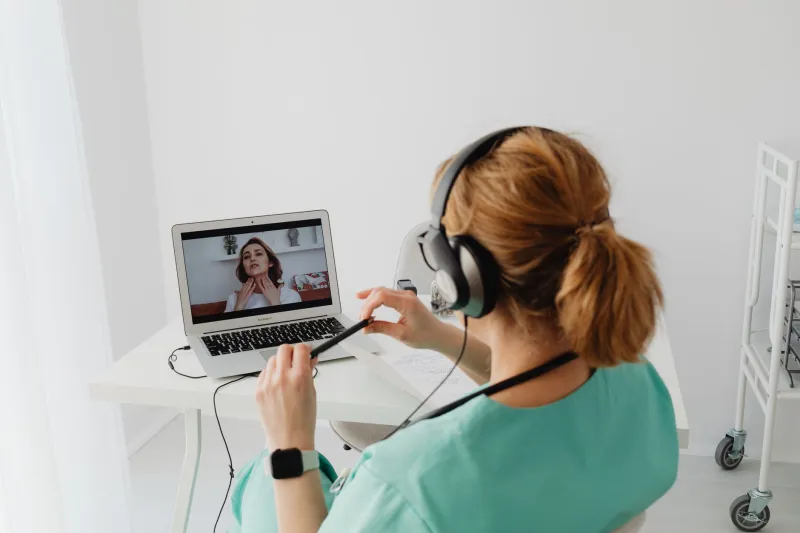
For symptoms that do not meet the emergency threshold above, after-hours telehealth is an appropriate and valuable resource. Understanding what a licensed provider is evaluating during that encounter can help you communicate more effectively and feel more confident in the outcome.
After-hours triage providers are trained to assess several dimensions of a symptom beyond its surface description. They are listening for acuity (how rapidly the symptom developed), trajectory (whether it is stable, improving, or worsening), associated symptoms (what else is happening in the body simultaneously), context (recent illness, medication changes, known health conditions, recent travel or exposures), and functional impact (whether the symptom is preventing normal activity or causing distress significant enough to interfere with basic functioning).
When you contact an after-hours telehealth provider, organizing your description around these dimensions — rather than simply reporting the sensation — dramatically improves the quality of the clinical assessment you receive. "I have had chest tightness for about 45 minutes, it is not getting worse, I do not have any arm or jaw pain, I have had panic attacks before that felt similar, and I took my anxiety medication 20 minutes ago" is a far more clinically useful statement than "my chest hurts and I am scared."
Distinguishing Anxiety's Physical Signature
Anxiety-driven nocturnal symptoms are not fabricated, and they are not trivial. They are the product of a genuine physiological cascade — the activation of the sympathetic nervous system — and they deserve to be taken seriously as a health concern in their own right.
The physical signature of acute anxiety tends to include: chest tightness that is diffuse rather than localized, palpitations that are irregular and awareness-driven rather than associated with exertion, shortness of breath that improves when you consciously slow your breathing, dizziness or lightheadedness that is positional and resolves quickly, and tingling or numbness in the hands, feet, or around the mouth (a common result of hyperventilation-induced changes in blood carbon dioxide levels).
Crucially, anxiety symptoms tend to respond to intervention. Slow diaphragmatic breathing, a change in position, grounding techniques, or the passage of a few minutes will typically produce some measurable improvement in anxiety-driven physical symptoms. Cardiac and neurological emergencies, by contrast, do not improve with breathing exercises.
If you are uncertain, you do not have to choose between calling 911 and doing nothing. After-hours telehealth exists precisely for this middle ground — to provide a trained clinical perspective on symptoms that are ambiguous, distressing, and occurring outside of standard office hours.
Building Confidence for the Next Time
The goal of this framework is not to make you an emergency physician. It is to give you enough structured vocabulary and clinical logic that the next time your body wakes you at 2 AM with an unfamiliar signal, you are not navigating it entirely alone in the dark.
Know the red flags. Trust the patterns. Use the resources available to you at any hour. And remember that reaching out to a licensed provider — whether through emergency services or a telehealth platform — is not an overreaction. It is exactly what those systems exist to support.