Always On, Always Worried: How 24/7 Telehealth Access Is Quietly Feeding America's Health Anxiety Crisis

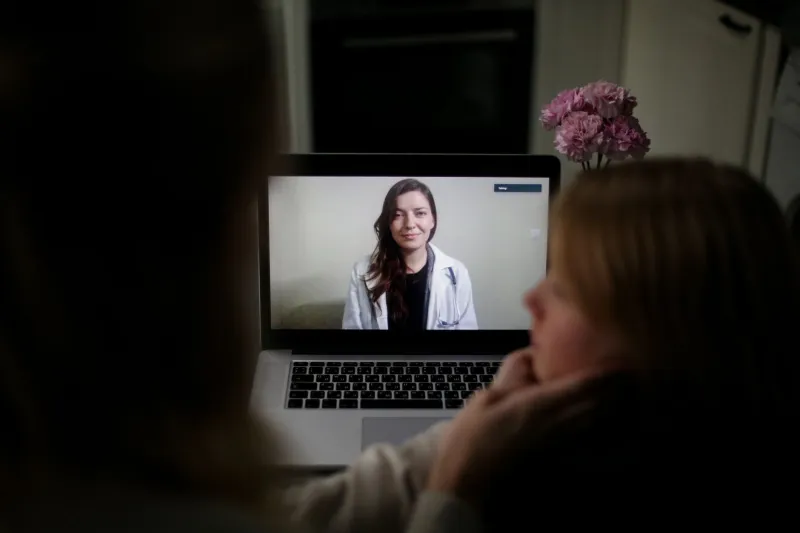
There is something quietly reassuring about knowing a licensed provider is available at any hour. At 2 AM, when an unfamiliar ache surfaces or a child develops a fever, the ability to connect with a medical professional in minutes feels like a genuine safety net. And in many respects, it is. The expansion of 24/7 telehealth services across the United States has democratized access to care, reduced unnecessary emergency room visits, and extended medical guidance to communities that have long been underserved.
Yet something unexpected has emerged alongside this convenience. For a growing number of Americans, the very availability of round-the-clock care has not produced calm — it has produced a new kind of restlessness. When the threshold for seeking medical input is removed, the human mind does not always respond with gratitude. Sometimes, it responds with more questions, more searches, and more worry than before.
This is the telehealth paradox: easier access to healthcare information and consultation has, for some patients, made the experience of being healthy feel increasingly difficult to trust.
The Psychology of Frictionless Care
For most of American medical history, seeking care required effort. Scheduling an appointment meant waiting days or weeks. Visiting an urgent care clinic meant driving, waiting, and committing a significant portion of a day. These friction points, while often frustrating, served an inadvertent psychological function: they created a natural pause between noticing a symptom and acting on it.
During that pause, many symptoms resolved on their own. Others revealed themselves as minor inconveniences rather than emergencies. The waiting period functioned, in effect, as a built-in reassurance mechanism — not because waiting is medically advisable, but because time itself often provided the answer.
When telehealth eliminates that interval, the reassurance mechanism disappears with it. A patient who might have monitored a mild headache for a day before deciding whether to call a doctor can now consult a provider within fifteen minutes of noticing the symptom. This is genuinely valuable in urgent situations. But for patients already prone to health anxiety — a condition that affects an estimated 4 to 5 percent of the U.S. population, with subclinical worry affecting many more — the frictionless pathway to consultation can become a revolving door.
Each consultation that ends without a serious diagnosis does not always produce relief. For anxious patients, it frequently produces a new question: What if they missed something? What if the symptom returns? Should I check again?
Choice Overload and the Medical Marketplace
Behavioral economists have long documented the phenomenon of choice overload — the counterintuitive finding that more options can produce less satisfaction and greater indecision. Applied to healthcare, this principle takes on a particular weight.
American patients now have access to an unprecedented range of 24/7 resources: telehealth platforms, symptom checkers, AI-assisted triage tools, nurse hotlines, and urgent care apps that can connect them with providers across multiple specialties. Each of these tools, taken individually, represents a meaningful advance. Collectively, however, they present a landscape in which the act of deciding how to seek care has become its own source of stress.
Should a patient use the telehealth app their insurer provides, or the one their employer offers as a benefit? Should they consult a general practitioner or seek out a specialist platform? Should they start with a symptom checker, or does doing so risk sending them down an alarming algorithmic path? The abundance of options can paradoxically make patients feel less capable of navigating their own health — and more dependent on external validation to confirm that they are, in fact, all right.
When Reassurance Becomes the Problem
Clinical psychologists who treat health anxiety have identified a well-documented pattern: reassurance-seeking provides temporary relief but reinforces the underlying anxiety over time. Each time a worried patient receives confirmation that their symptom is benign, the relief they feel is genuine — but short-lived. The anxiety returns, often stronger, because the patient has learned that consulting a provider is the mechanism that produces calm. The body's own signals, by contrast, have been implicitly cast as untrustworthy.
In a world where reassurance is available at any hour, this cycle can accelerate dramatically. A patient who once might have sought reassurance once a week can now seek it multiple times in a single night. The 24/7 availability of care, rather than resolving the anxiety, feeds it a continuous supply of fuel.
This is not a criticism of telehealth platforms or the providers who staff them. It is, rather, a recognition that technology designed to improve access to care must be paired with an understanding of the psychological dynamics that shape how patients use it.
Recognizing the Signs in Yourself
Not every patient who uses telehealth services after hours is caught in an anxiety cycle. Many are managing genuine, time-sensitive symptoms that benefit enormously from immediate access to professional guidance. The distinction lies not in the frequency of consultation alone, but in the emotional experience surrounding it.
Consider whether the following patterns feel familiar:
- Consultations that do not produce lasting relief. If speaking with a provider leaves you feeling calm for only a short period before a new worry surfaces, the issue may be less about the symptom and more about the anxiety itself.
- Escalating thresholds for reassurance. If you find that you need to consult more frequently, or with more specialists, to achieve the same sense of calm you once got from a single conversation, this escalation is worth noting.
- Symptom monitoring that interferes with daily life. Regularly checking pulse, blood pressure, or other physical indicators — particularly at night — can amplify rather than reduce health-related distress.
- Difficulty tolerating uncertainty. Health anxiety is fundamentally a difficulty tolerating the unavoidable ambiguity of living in a body. If uncertainty about a symptom feels intolerable rather than merely uncomfortable, this is a meaningful signal.
Using 24/7 Resources Without Being Consumed by Them
The goal is not to discourage Americans from using the legitimate, valuable tools that round-the-clock telehealth provides. It is to encourage a more intentional relationship with those tools — one in which they serve the patient's wellbeing rather than quietly undermining it.
Several practical approaches can help maintain that balance:
Establish a personal triage threshold before symptoms arise. Decide in advance what categories of symptoms warrant immediate consultation — difficulty breathing, chest pain, signs of stroke, high fever in an infant — and which can reasonably be monitored for a defined period before seeking input. Having a framework in place reduces the pressure to make that judgment in the middle of a worried night.
Treat a single consultation as complete. When a provider has evaluated a symptom and offered guidance, make a conscious decision to accept that assessment for a defined period — typically 24 to 48 hours — before seeking a second opinion, unless the symptom meaningfully worsens.
Distinguish between information-seeking and reassurance-seeking. Consulting a telehealth provider to understand what a symptom might indicate is qualitatively different from consulting one to be told that you are not dying. The former is a legitimate use of the resource. The latter, repeated frequently, is a sign that the underlying anxiety deserves direct attention.
Consider speaking with a mental health professional. Cognitive behavioral therapy has a strong evidence base for treating health anxiety specifically. A licensed therapist can help patients develop the tolerance for uncertainty that no number of medical consultations can provide.
A Different Kind of Care, Available Right Now
At Healthcare 24Hrs, we believe that access to round-the-clock medical guidance represents one of the most meaningful advances in modern American healthcare. We also believe that truly serving patients means acknowledging the full picture — including the ways in which constant availability can, for some, become a source of distress rather than comfort.
If you recognize yourself in the patterns described here, that recognition is itself a form of progress. The resources to address health anxiety — including telehealth-based mental health services available at any hour — are as accessible as the symptom checkers that may have brought you here. The question worth asking tonight is not only What is wrong with my body? but What does my mind need right now? Sometimes, those are very different questions with very different answers.