Convenience at a Cost: How Unlimited Healthcare Access Is Draining American Wallets

For most of American history, the friction involved in seeing a doctor — scheduling an appointment, taking time off work, driving to a clinic — served an unintended but economically useful function. It filtered out visits that weren't truly necessary. Today, that friction is nearly gone. At any hour, from any device, Americans can consult a licensed provider, receive a diagnosis, order a prescription, and have it delivered before sunrise. The question that researchers and health economists are beginning to ask is not whether this is convenient. It clearly is. The question is whether that convenience is making Americans financially worse off.
The evidence, while still emerging, is unsettling.
The Midnight Prescription Problem
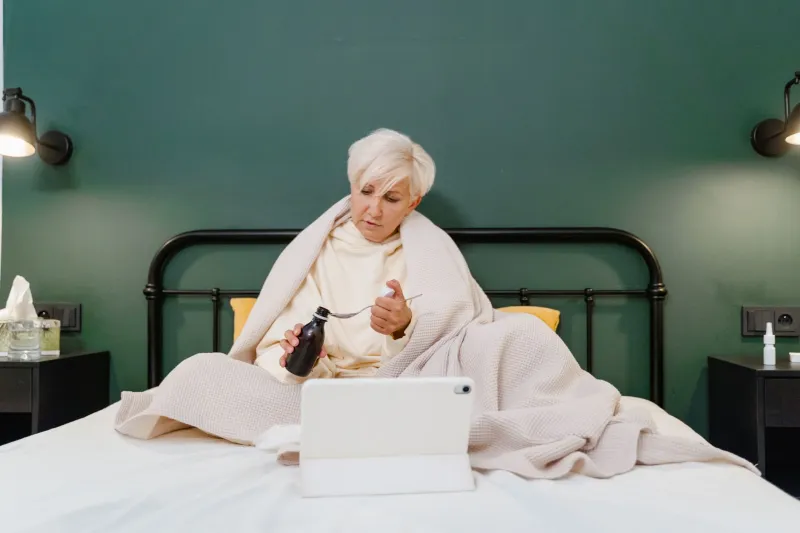
When a telehealth platform is available at 2 AM, patients use it at 2 AM. That is not a criticism — it is a behavioral reality. But what happens during those late-night consultations is worth examining carefully.
A 2022 study published in JAMA Internal Medicine found that telehealth visits were significantly more likely than in-person visits to result in antibiotic prescriptions, even in cases where antibiotics were clinically inappropriate. The likely driver, researchers noted, was a combination of patient expectation and provider incentive: patients who sought care at odd hours often felt something needed to be done, and providers operating remotely had limited tools to push back. The result was unnecessary prescriptions — each carrying a copay, each potentially triggering downstream pharmacy costs, and in some cases, each leading to follow-up visits when the medication failed to resolve a viral illness it was never going to touch.
This is one face of what economists call demand-side moral hazard: when the perceived cost of a decision drops (in this case, the effort required to see a doctor), consumption of that service rises, often beyond what is medically optimal.
The Specialist Spiral
The pattern does not end with a single telehealth visit. For many patients, it is only the beginning.
Consider a common scenario: a patient wakes at midnight with chest tightness, searches their symptoms online, becomes alarmed, and logs into a telehealth platform. The on-call provider — appropriately cautious given the limitations of a remote consultation — recommends follow-up with a cardiologist. The patient, still anxious, schedules that cardiology appointment the next morning. The cardiologist orders an echocardiogram. The echocardiogram is normal. The chest tightness, it eventually turns out, was musculoskeletal — the result of poor posture during a long workday.
Total cost: one telehealth copay, one specialist copay, one imaging copay, and a partially burned deductible. Total medical necessity of that cascade: debatable.
Health economists refer to this as induced demand — a well-documented phenomenon in which access to one level of care generates demand for additional layers of care. When that initial access point is available around the clock and requires almost no effort to reach, the cascade can begin far more readily than it would have in an era when patients were forced to wait until morning and, in many cases, discovered their symptoms had resolved on their own.
The Supplement and Device Market
Beyond clinical services, 24/7 health information access has created something arguably more insidious: a permanent, always-open marketplace for health products that patients are primed to purchase at their most vulnerable moments.
The hours between midnight and 4 AM are, according to e-commerce data analyzed by marketing research firms, among the highest-converting periods for health supplement purchases. A patient who has just spent forty-five minutes reading about magnesium deficiency, cortisol imbalance, or adrenal fatigue — conditions that may or may not apply to them — arrives at a product page in a state of heightened concern and reduced critical thinking. Sleep deprivation, which affects a substantial portion of Americans who are awake at those hours for non-professional reasons, measurably impairs the prefrontal cortex's ability to evaluate risk and resist impulsive decisions.
The supplement industry in the United States is now valued at over $50 billion annually, and a significant portion of that revenue is generated through health-adjacent content that exists in a regulatory gray zone — not quite medical advice, not quite advertising, but functionally both. For many Americans, the financial bleed is not dramatic in any single transaction. It accumulates quietly: a probiotic subscription here, a continuous glucose monitor there, a genetic testing kit ordered at 1 AM after reading a wellness article.
When Waiting Would Have Been the Cheaper Choice
Behavioral health economists have a term for the option that round-the-clock access has effectively eliminated: watchful waiting. It is a legitimate clinical strategy — one that primary care physicians have employed for decades — in which a provider and patient agree to monitor a symptom over a defined period before pursuing diagnostic or therapeutic intervention. It is also, in many cases, the most cost-effective approach available.
The challenge is that watchful waiting requires tolerance for uncertainty, and uncertainty is precisely what 24/7 health information environments are least equipped to support. Every platform, whether a telehealth app, a symptom checker, or a health news website, is architecturally designed to provide answers. The business model depends on engagement, and engagement is driven by the promise of resolution. Sitting with ambiguity — which is often the medically appropriate response to a mild, self-limiting symptom — generates no revenue and earns no engagement metrics.
This is not an indictment of any individual platform or provider. It is a structural observation about the incentive landscape that has formed around always-available healthcare.
Toward Smarter Access
None of this argues for returning to a world in which patients cannot reach a provider after hours. Genuine emergencies do not respect business hours, and the equity benefits of telehealth — particularly for rural Americans, uninsured patients, and those with limited mobility — are real and significant. The goal is not less access. It is more deliberate access.
Patients can protect themselves financially by establishing a primary care relationship that includes after-hours guidance on when telehealth is and is not appropriate for their specific health profile. Many primary care practices now offer nurse triage lines that can help patients make that determination before they commit to a telehealth visit that may set a costly cascade in motion.
Health literacy — specifically, the ability to distinguish between a symptom that warrants immediate attention and one that can safely be evaluated in the morning — remains one of the most undervalued financial skills an American can develop. Resources like those available through Healthcare 24Hrs are designed to support exactly that kind of informed decision-making: not to replace clinical judgment, but to help patients arrive at the right level of care at the right time.
Convenience is not inherently expensive. But convenience without context almost always is.