By Monday, the Moment Has Passed: How Weekend Symptoms Slip Through the Diagnostic Cracks
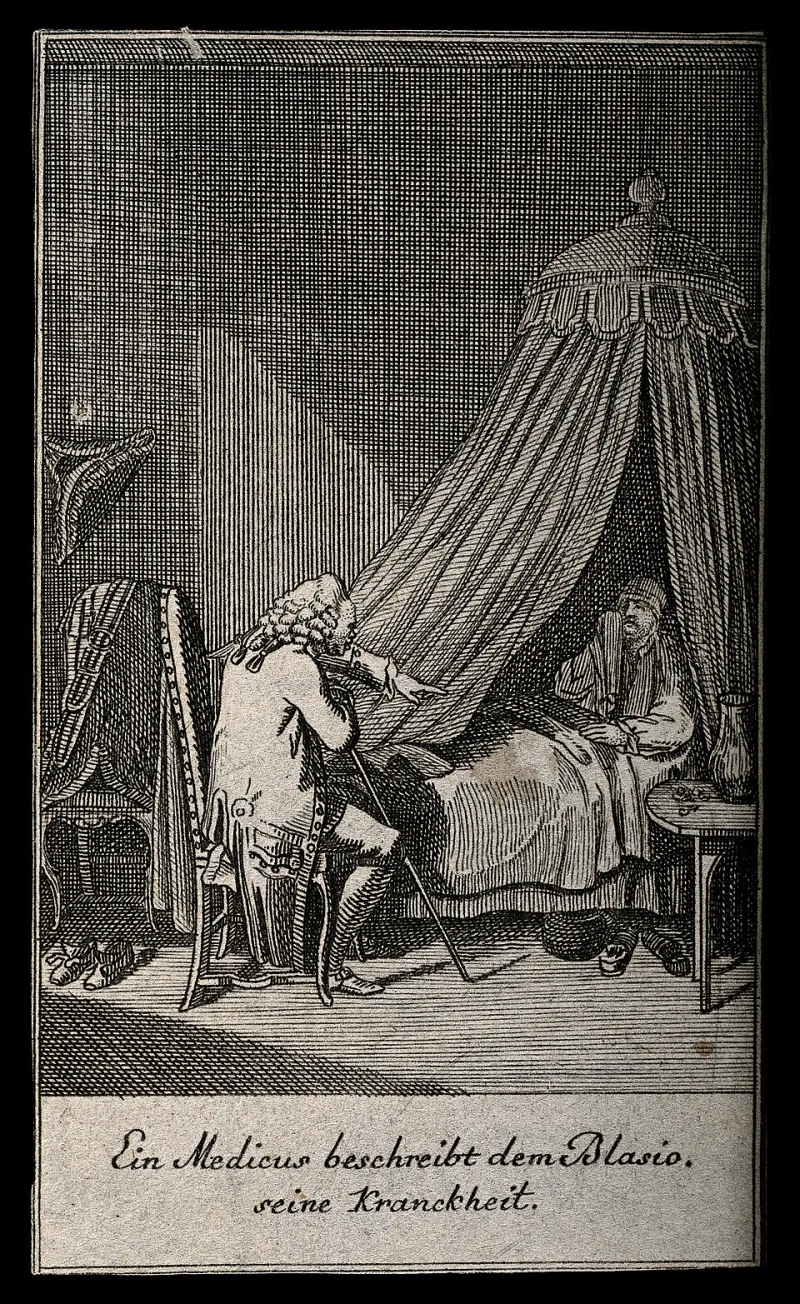
Photo: Unknown, CC BY 4.0, via Wikimedia Commons
It is a scenario that plays out in primary care offices across the United States every single Monday. A patient sits across from their doctor and attempts to describe something alarming that happened over the weekend — a racing heart, a sudden wave of dizziness, a pain that seemed unbearable at 11 PM on Saturday. By the time that appointment arrives, however, the symptom has softened at the edges. The urgency has dimmed. And the physician, working from a secondhand account of an event that has already passed, must piece together a clinical picture from memory, approximation, and guesswork.
This is what healthcare providers sometimes call the Monday Morning Diagnostic Gap — and it is more consequential than most patients realize.
Why Symptoms Behave Differently Over Weekends
The human body does not observe a five-day workweek. Certain physiological patterns, however, do make weekends a particularly vulnerable window for health events. Cardiovascular research has long established that heart attacks cluster in the early morning hours, particularly on Mondays, but the days preceding that spike — when stress hormones fluctuate, routines shift, and sleep patterns become irregular — can produce symptoms that are real, measurable, and easy to dismiss.
Weekend behaviors also differ meaningfully from weekday ones. Americans tend to eat differently, drink more alcohol, sleep at irregular hours, and engage in physical activity at intensities their bodies are not conditioned for. Each of these variables can provoke symptoms — palpitations after a heavy Saturday meal, joint pain after an unusually long hike, gastrointestinal distress tied to dietary changes — that resolve partially or completely before a scheduled appointment.
The result is a clinical gap: something happened, but the evidence has largely self-corrected by the time a physician can evaluate it.
The Memory Problem: Why Patients Struggle to Report Accurately
Even when a symptom was genuinely severe, patients frequently underreport its intensity when describing it days later. This is not dishonesty — it is neuroscience.
Research on pain memory consistently shows that people are poor historians of their own discomfort. The brain does not store pain the way a recording device stores sound. Instead, it reconstructs the experience each time it is recalled, and that reconstruction is shaped by current emotional state, intervening events, and what psychologists call the peak-end rule — the tendency to remember an experience based on its most intense moment and how it concluded, rather than its full duration or complexity.
If a patient's chest pain peaked at a 7 out of 10 on Saturday night but had faded to a 2 by Sunday afternoon, they may walk into Monday's appointment and report a 3 or 4 — inadvertently compressing the severity of what actually occurred. A physician calibrating their response to that reported number may reasonably pursue a less aggressive diagnostic path than the original event warranted.
Anxiety plays a compounding role. Many patients feel embarrassed describing weekend symptoms that no longer seem as serious. They worry about appearing dramatic or hypochondriacal. This social pressure produces further underreporting at exactly the moment when precision matters most.
What Physicians Cannot See Without Documentation
A clinician examining a patient in a calm office environment is working with a body that has had 48 to 72 hours to compensate, rest, and partially recover. Blood pressure may have normalized. An arrhythmia may have resolved. Swelling may have subsided. Skin changes, respiratory patterns, and neurological signs that would have been visible during the acute event have often cleared entirely.
This is not a failure of medicine — it is a limitation of time. Physicians are skilled at interpreting what is in front of them, but they cannot retrospectively examine a body that experienced something two days ago unless that experience was captured in some form. Without documentation, they are relying entirely on the patient's verbal account, which — as established above — is subject to significant distortion.
This is particularly concerning for conditions that are episodic by nature: atrial fibrillation, transient ischemic attacks, panic disorder, hypoglycemic episodes, and certain seizure variants. These conditions can leave virtually no trace between events, making the patient's account the primary diagnostic tool. When that account is imprecise, the diagnostic process stalls.
Bridging the Gap: Real-Time Documentation as a Health Strategy
The most effective countermeasure to the Monday Morning Diagnostic Gap is documentation at the time of the event — not in retrospect. Healthcare 24Hrs encourages every American household to treat symptom recording as a basic health literacy skill, no different from knowing how to read a medication label.
Practical steps include:
Write it down immediately. When a symptom occurs, note the time, its location in the body, its intensity on a scale of 1 to 10, any associated sensations, what you were doing when it began, and what made it better or worse. Even a voice memo recorded at the moment of the event is more reliable than a memory reconstructed three days later.
Use your phone's camera. Visible symptoms — rashes, swelling, bruising, unusual skin coloration — should be photographed with a timestamp. A dermatological or vascular symptom that has resolved by Monday can still be evaluated if a clear image exists.
Monitor and record vitals. If you own a blood pressure cuff, a pulse oximeter, or a wearable fitness tracker, check and note your readings during the symptomatic period. Many smartwatches now offer heart rhythm monitoring that can capture irregular beats in real time — data that a physician can review even after the episode has passed.
Engage a telehealth provider during the event. This is precisely the scenario that 24/7 telehealth services exist to address. A licensed provider who evaluates you during or immediately after a symptomatic episode can generate a clinical record — notes, assessments, referrals — that travels with you into Monday's appointment. This contemporaneous documentation transforms the physician's understanding of what occurred and provides a baseline for comparison.
Talking to Your Doctor When the Moment Has Already Passed
If you arrive at an appointment without documentation, there are still ways to improve the accuracy of your account. Avoid the temptation to minimize. Report the peak intensity of the symptom as you experienced it at its worst, not as you feel now. Use specific language where possible — "a sharp, stabbing pain behind my left shoulder blade" communicates more than "some discomfort in my back."
Bring any relevant context: what you ate, how much you slept, whether you consumed alcohol, whether the symptom was accompanied by shortness of breath or nausea. These details help a physician reconstruct the clinical environment even without direct observation.
If you genuinely believe what happened over the weekend was serious, say so clearly. Advocate for the level of follow-up you feel the situation warrants. Physicians work within time constraints, and a patient who communicates urgency — even after the fact — is more likely to receive a thorough evaluation.
The Broader Lesson
The gap between when symptoms occur and when they are professionally evaluated is one of the more underappreciated vulnerabilities in American outpatient healthcare. Weekends widen that gap. Memory narrows the account. And by Monday, something that felt like an emergency has often been quietly rationalized away.
The answer is not to flood emergency rooms with every weekend worry. It is to build the habit of capturing health events in real time — and to use the round-the-clock resources available to ensure that what happens on Saturday night does not disappear before it can be properly understood.