After Dark, Everything Hurts More: The Science Behind Nighttime Symptom Amplification and How to Think Clearly Before Calling for Help

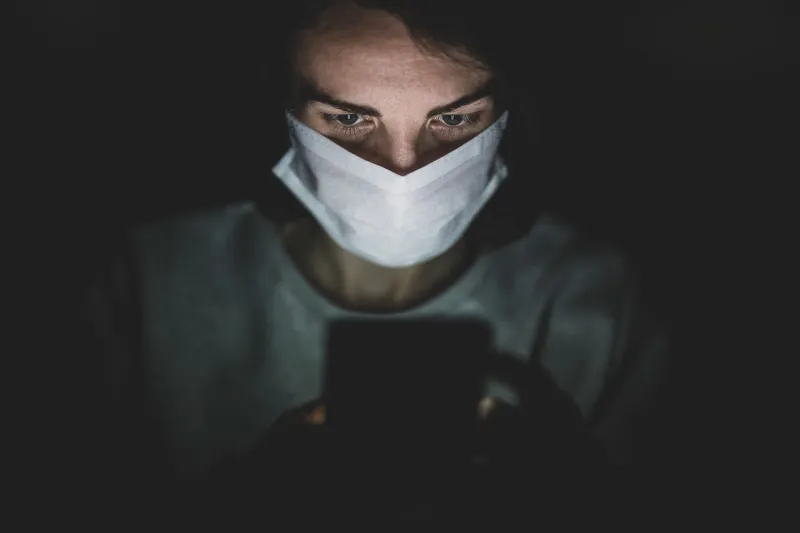
Photo: BarelyawakeFL, CC0, via Wikimedia Commons
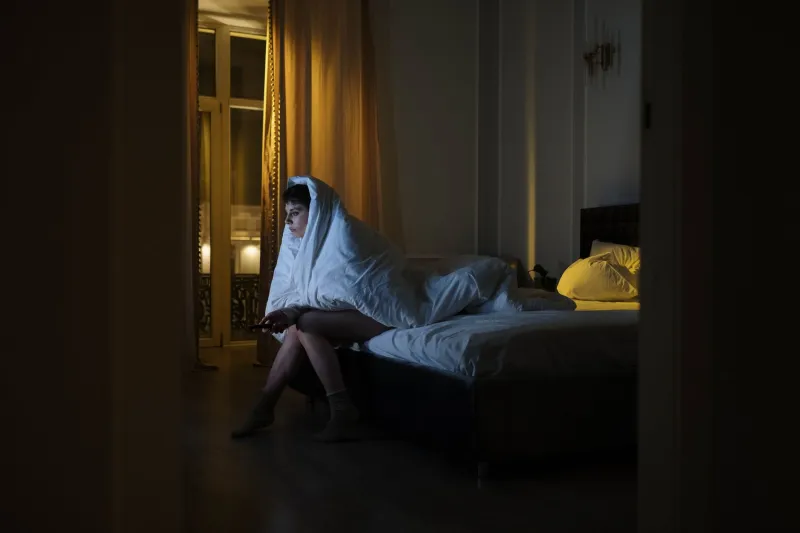
It is 2:17 AM. A dull ache in your chest that barely registered at noon now feels impossible to ignore. Your mind races through worst-case scenarios. You reach for your phone, unsure whether you are facing a genuine emergency or simply the particular cruelty of lying awake in a quiet house with nothing to distract you from your own body.
You are not imagining things — but you may be misinterpreting them. The nighttime hours create a specific and well-documented set of conditions that cause identical symptoms to feel significantly more alarming than they would in daylight. Understanding those conditions is not merely academic. It is practical knowledge that can help you triage more accurately, communicate more effectively with healthcare providers, and avoid both the danger of dismissing something serious and the exhaustion of unnecessary panic.
The Body's Internal Clock Is Not Neutral
Your circadian rhythm governs far more than sleep. It regulates hormone secretion, immune function, cardiovascular activity, and critically, pain perception. Research published in peer-reviewed journals has consistently demonstrated that the threshold at which the human nervous system registers pain is lower during nighttime hours than during the day. In plain terms, your body is biologically primed to feel more pain after dark — not because the underlying condition has worsened, but because your internal clock has shifted the sensitivity dial.
Cortisol, the hormone most associated with stress response and inflammation regulation, follows a pronounced daily curve. Levels peak in the early morning hours and fall significantly by late evening. That drop in cortisol removes a natural anti-inflammatory buffer, which means joint pain, headaches, and inflammatory conditions frequently intensify between midnight and 4 AM regardless of whether the underlying cause has changed at all.
For patients with chronic conditions — arthritis, fibromyalgia, migraine — this phenomenon is familiar. But even for otherwise healthy adults, a circadian dip in pain tolerance can transform a manageable symptom into something that feels urgent.
Silence Has a Volume of Its Own
During waking hours, the brain is engaged in a continuous process of sensory filtering. Work demands, conversation, ambient noise, screen activity — all of these compete for neural resources, effectively crowding out minor physical sensations. Neurologists describe this as attentional gating: the brain's mechanism for prioritizing the most immediately relevant stimuli and suppressing background signals.
At night, that competition disappears. The room is quiet, the house is still, and the brain — still active, still monitoring — has nothing to filter out. Physical sensations that were present all day but successfully gated now move to the foreground. The heartbeat becomes audible. The twinge in your lower back becomes the only thing in the room.
This is not a flaw in human neurology. It is a feature of a monitoring system designed to detect threats during vulnerable hours. The problem is that this system cannot distinguish between a genuinely dangerous symptom and a benign one that simply has the floor to itself.
How Anxiety Rewrites Sensation
Health anxiety does not require a pre-existing anxiety disorder to operate. Any person, in any state of baseline mental health, can enter a feedback loop at 3 AM in which a physical sensation triggers worry, worry triggers physiological arousal, and physiological arousal produces new physical sensations — a faster heartbeat, shallow breathing, muscle tension — that are then interpreted as additional symptoms.
This cycle is well-recognized in clinical psychology and is particularly active during nighttime hours when the prefrontal cortex — the region of the brain most responsible for rational evaluation — is operating under the influence of sleep pressure and fatigue. Put simply, the part of your brain best equipped to assess risk calmly is the part most compromised at midnight.
Telehealth providers who staff overnight lines across the United States consistently report that a significant proportion of after-hours contacts involve symptoms that, when assessed in the calm of morning, are recognized by the patients themselves as less severe than they initially appeared. That is not a criticism of those patients. It is a reflection of how powerfully the nighttime environment distorts symptom perception.
What Physicians Want You to Do Before You Call
Clinicians who practice after-hours telemedicine are not discouraged by patients who reach out with genuine uncertainty. What they consistently wish, however, is that patients arrived at that decision point having already performed a few basic self-assessments.
Compare the symptom to its daytime baseline. Before assuming a symptom has escalated, ask yourself honestly whether it was present earlier in the day and how it registered then. If the answer is that it was present but unremarkable, that context matters.
Change your position and your environment. Stand up, walk briefly through another room, drink a glass of water, and turn on a light. A surprising number of nighttime symptoms are significantly influenced by prolonged stillness, dehydration, or the psychological effect of darkness itself. Reassess after five minutes in a different physical state.
Apply the 20-minute rule for non-emergency symptoms. If a symptom is not consistent with a genuine emergency — chest pain with radiation to the arm or jaw, sudden severe headache unlike any previous headache, difficulty breathing, signs of stroke — give yourself 20 minutes of calm, distraction-based activity before deciding whether to contact a provider. Symptoms driven primarily by anxiety and attentional amplification often diminish during this window.
Know your non-negotiables. The 20-minute rule has firm exceptions. Certain symptoms require immediate action regardless of the hour, regardless of how the mind is framing them. Chest pressure or tightness, sudden vision changes, slurred speech, one-sided weakness, severe abdominal pain, or any symptom that feels genuinely different from anything you have experienced before — these warrant calling 911 or accessing emergency services without delay.
Using After-Hours Telehealth Wisely
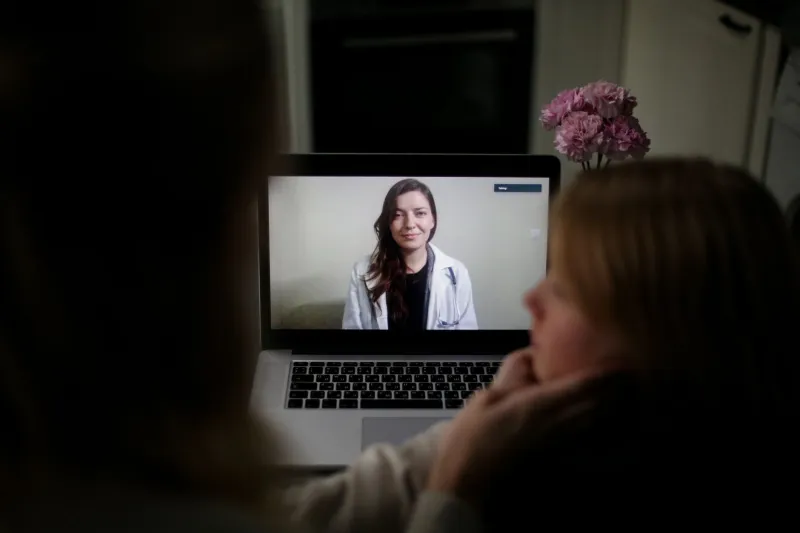
The availability of licensed telehealth providers around the clock is one of the most meaningful advances in American healthcare access in the past decade. These services exist precisely because health does not follow a 9-to-5 schedule. However, they function best when patients approach them as a calibration tool rather than a confirmation of their worst fears.
When you contact an after-hours provider, describe your symptom in factual terms rather than emotional ones. Note when it started, whether it is constant or intermittent, what makes it better or worse, and whether it is accompanied by other objective signs. This framing helps the provider assess accurately and helps you, in the act of describing, hear your own symptom more clearly.
Documenting symptoms as they occur — even briefly, in the notes app on your phone — also creates a record that is valuable the following morning, whether you ultimately need to follow up with a primary care physician or simply want to understand a pattern over time.
The Case for Morning Perspective
There is a reason physicians have long observed that patients who call at midnight often feel significantly better by 8 AM. That observation is not dismissive. It reflects the genuine power of circadian biology, restored cortisol levels, the return of attentional competition, and the rational clarity that accompanies daylight and rest.
This does not mean waiting until morning is always the right choice. It means that morning perspective is a real clinical variable — one worth accounting for when you are trying to determine whether what you are feeling at 2 AM is a crisis or simply the night doing what the night does to the human body.
Healthcare 24Hrs exists because medical questions do not pause for sunrise. But the most empowered patients are those who understand their own neurobiology well enough to bring that knowledge into every after-hours decision they make.